
Pairing Gin Cocktails with Food
Expert guide to matching gin botanical profiles with culinary flavours for the perfect dining experience.
The Art of the Match
Wine pairing gets all the attention, but gin cocktails offer something wine never can: infinite versatility. With dozens of botanicals and countless cocktail variations, gin can be tailored to complement virtually any dish. The key is understanding botanical profiles and how they interact with flavour.
This isn't about rigid rules - it's about creating harmonious experiences. Think of it as a conversation between your cocktail and your food, where each enhances the other without overpowering.
Understanding Botanical Profiles
Before we dive into specific pairings, let's understand the three main botanical categories in gin and how they interact with food:
Botanical Categories
Citrus-Forward Gins
High in lemon, lime, or orange notes. These cut through richness and complement seafood, salads, and light dishes. SUMMIT Base Camp falls into this category with its tangerine peel lift.
Herbaceous & Floral Gins
Dominated by botanicals like lavender, chamomile, or rosemary. Pair beautifully with chicken, pork, and vegetable dishes.
Spice-Forward & Warming Gins
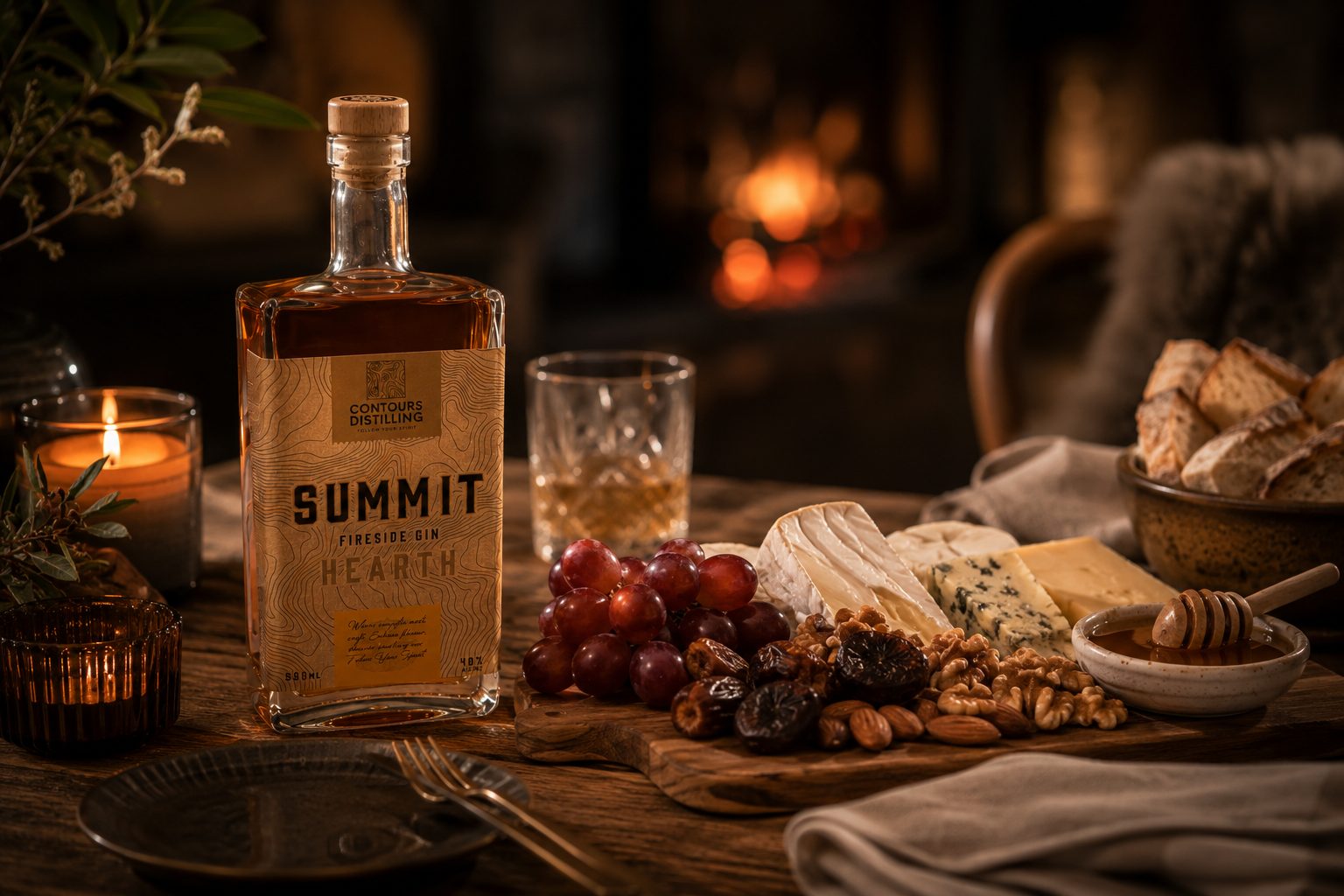
Bold warming spices, oak influence, or dried fruit notes. Handle richer meats, curries, and bold flavours. SUMMIT Hearth with its oak and muscat character is an excellent example.
Pairing Principles
1. Match Intensity
A delicate gin and tonic will be overwhelmed by a heavily spiced curry, while a bold Negroni might overshadow subtle sashimi. Match the intensity of your cocktail to your food.
Quick Rule:
Light dishes → Simple cocktails (G&T, Tom Collins)
Rich dishes → Complex cocktails (Negroni, Martinez)
2. Complement or Contrast
You can either echo flavours (citrus gin with citrus-marinated fish) or create contrast (spicy gin with rich, fatty dishes). Both approaches work - it depends on the experience you want to create.
3. Consider Tonic and Mixers
Your mixer matters as much as the gin. A sweet tonic will pair differently than a dry one. Herbal tonics amplify botanical notes, while classic tonics provide balance. This flexibility is your secret weapon.
Perfect Pairings by Course
Appetizers & Starters
Oysters & Raw Seafood
Pairing: Classic Gin & Tonic with SUMMIT Base Camp
The citrus notes mirror the lemon traditionally served with oysters, while the carbonation cleanses the palate between bites. Use a dry tonic to avoid sweetness competing with the briny minerality.
Charcuterie & Cured Meats
Pairing: Gin Martini with SUMMIT Inversion
The dry, botanical-forward profile cuts through the fat and salt of cured meats. The earthy Fukamushi sencha notes and slight bitter edge from vermouth provide contrast to the richness.
Fresh Salad with Citrus Vinaigrette
Pairing: Tom Collins with SUMMIT Base Camp
The lemon juice in the cocktail echoes the vinaigrette, while the light effervescence complements crisp greens. The botanical complexity adds another dimension to fresh vegetables.
Main Courses
Grilled Fish or Prawns
Pairing: Gin Basil Smash or G&T with herbal garnish
Fresh herbs bridge the gap between botanical gin and charred seafood. Add cucumber for extra cooling contrast if there's any spice involved. The citrus keeps everything bright and balanced.
Roast Chicken with Herbs
Pairing: Gin & Tonic with rosemary garnish
Match the herbal notes in both the gin and the chicken. A mid-weight tonic provides structure without overwhelming the delicate poultry. The rosemary garnish creates aromatic harmony.
Pork Belly or Rich Meat Dishes
Pairing: Negroni with SUMMIT Hearth
The bitter Campari and warming oak-influenced gin botanicals cut through rich fat like a knife. The dried fruit notes from the muscat finish complement caramelized edges and glazes beautifully.
Spicy Asian Cuisine
Pairing: Cucumber Gin Collins
Cooling cucumber tempers heat while citrus and bubbles refresh the palate. The botanical complexity of gin complements complex spice blends without adding more heat. Avoid overly sweet mixers that can clash with savory spices.
Cheese & Dessert
Aged Cheese Board
Pairing: Gin Martini or Gin & Tonic with pepper garnish
The botanical complexity matches aged cheese's depth, while citrus cuts through richness. Pair harder cheeses with drier cocktails, softer cheeses with slightly more aromatic serves.
Light Fruit-Based Desserts
Pairing: Gin Fizz or French 75
Delicate and effervescent cocktails complement without overwhelming fruit tarts or sorbets. The citrus notes enhance berry flavors while bubbles provide textural contrast.
Build Your Perfect Pairing
Explore our SUMMIT collection and discover your ideal food pairing combinations
Shop SUMMIT GinsPro Tips for Home Pairing
Start Simple
Master the G&T pairing first. Once you understand how botanicals interact with food, you can explore complex cocktails.
Garnish Strategically
Your garnish should bridge gin and food. Serving fish? Use lemon. Roast meat? Try rosemary or black pepper.
Adjust Ratios
For food pairing, often a slightly stronger gin presence (1:2 gin to mixer) works better than the standard 1:3 ratio. You want the botanicals to shine through.
Temperature Matters
Cold cocktails provide refreshing contrast to hot dishes. Consider the overall temperature balance of your meal.
Experiment Fearlessly
These are guidelines, not rules. If a pairing sounds interesting to you, try it. Some of the best combinations come from unexpected matches.
Gin Food Pairing by Food Type
Looking for a quick answer to "what food goes with gin?" Here are the pairings that work best for the dishes people ask about most.
Gin with seafood
Citrus-forward gins and a classic G&T with lemon are made for oysters, prawns, grilled fish and fish and chips. Juniper and citrus cut through brine and batter the way a squeeze of lemon does. For raw fish such as sashimi or ceviche, keep it light: a dry Martini or a gin and soda.
Gin with spicy dishes
Thai, Indian and Mexican food suit a long, cold G&T or a Tom Collins. The bubbles and dilution cool the heat, while ginger, coriander seed and citrus botanicals echo the spices. Avoid high-strength stirred drinks, which amplify chilli burn.
Gin with cheese
Fresh goat's cheese and feta love a herbal, citrusy gin. Aged cheddar, blue cheese and washed rinds stand up to bolder, spiced or oaked gins, or a Negroni whose bitterness balances the fat.
Gin with roast and grilled meats
Roast lamb, pork and barbecued meats pair with resinous, spiced or fireside-style gins. Try a Negroni or a Gin Old Fashioned alongside richer cuts.
Gin with salads and vegetables
Herbal and floral gins match green salads, asparagus, peas and tomato dishes. A cucumber-garnished G&T mirrors fresh garden flavours.
Gin with desserts
Lemon tart, berry pavlova and fruit sorbets suit a French 75 or a gin fizz. For chocolate, choose a spiced gin with orange; the warmth of the spice links the two.
Building a Pairing Menu
Hosting a dinner party? Consider a progression of gin cocktails that complement each course. Start light and citrus-forward with appetizers, move to more complex botanical profiles with mains, and finish with effervescent, delicate drinks for dessert.
The beauty of gin is its versatility - with just a few bottles and smart garnishing, you can create a complete pairing menu that rivals any wine dinner. Your guests will be talking about it for weeks.
Continue Reading
How We Craft Summit Base Camp
A behind-the-scenes look at the process of creating our signature dry gin
Read how we craft Base CampThe Botanicals Behind Our Gins
Discover the botanicals that give our gins their distinctive character
Read the botanicals guideContours Collective